
Blog
Individual Education Programmes
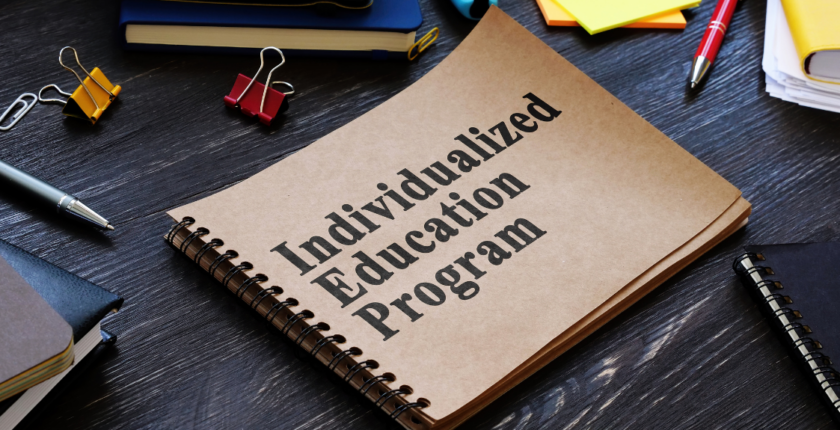
The rationale behind an IEP is rooted in the Children’s Act of South Africa, which mandates that
students with disabilities receive appropriate education that prepares them for post-school
outcomes.
By developing and implementing an IEP, educators and parents can work together to provide a
personalised education that addresses the unique needs and goals of each student. In this
article, we explore what an IEP is and how it is developed.
What is an IEP?
An IEP (Individualised Education Program) is a document outlining a plan or program developed
to ensure that a child who has a disability receives specialised instruction and related services
to support their unique needs. It is typically developed for students with Specific Learning
Disabilities or Special Needs who face significant challenges in accessing and making progress
in the traditional general curriculum.
Who Develops an IEP?
An IEP is developed through a collaborative process involving a team of individuals, including:
Parents/Guardians
Parents and guardians provide valuable insights into their child’s strengths, needs, and
interests. They also provide goals that are useful and meaningful to a child and their family.
These goals typically address a child’s engagement, social relationships, and independence.
Special Education Teachers
A special education teacher provides their knowledge of the curriculum and academic
expectations. They also provide expertise on how content and instruction should be adapted
and tailored to meet a student’s unique needs.
Related Service Providers
Professionals like Speech Therapists, Occupational Therapists, Physiotherapists, and
Psychologists provide their expertise.
School Administrators
School Administrators ensure that an IEP aligns with school policies and resources.
Students (when appropriate)
Older students or those with sufficient self-awareness may participate in setting their own goals.
Support Staff
Optional participants, such as facilitators or support staff, may also provide their expertise.
Together, members of an IEP team collaborate to:
● Identify a child’s strengths and challenges
● Determine priority areas for goal development
● Develop specific, measurable, achievable, relevant, and timebound (SMART) goals
● Establish a plan for progress monitoring and evaluation
This collaborative approach ensures that IEP goals are comprehensive, realistic, and tailored to
a child’s unique needs.
How is an IEP Developed?
The IEP development process typically involves the following steps:
1. Referral: The process begins when a student is identified as potentially needing special
education services. This could be through teacher observations, parent concerns, or
screening assessments.
2. Full Individual Evaluation (FIE): The student’s IEP team, including parents, teachers,
specialists, and administrators, meets to conduct a comprehensive evaluation. This
assesses the student’s strengths, needs, interests, behaviour, and how these factors
impact their learning.
3. Goal Setting: Based on the FIE results, the IEP team works together to set specific,
measurable, achievable, relevant, and time-bound (SMART) goals for the student. These
goals address academic, functional, and behavioural needs.
4. Determining Services: The team identifies the specialised services, therapies, and
supports the student requires to achieve their goals. This might include speech therapy,
occupational therapy, or other interventions.
5. Progress Monitoring: The team establishes methods to track the student’s progress
towards their goals. This could involve regular assessments, observations, or data
collection.
6. Writing and Finalising the IEP Document: The special education teacher, in
collaboration with the team, writes and finalises the IEP document. This document
outlines the student’s goals, services, accommodations, and evaluation procedures.
7. Implementation: The IEP team works together to put the plan into action. This involves
providing the designated services, accommodations, and supports outlined in the IEP.
8. Review and Revision: The IEP is a living document. It is regularly reviewed and
updated (at least annually) to ensure it remains relevant and effective for the student’s
evolving needs.
IEP Goals and The Smart Framework
Goals in an IEP are formulated using the SMART framework. Below we cover each element of
the framework.
Specific:
● Clearly define the specific skill the student will be working on.
● Avoid vague or general terms and jargon.
● Example: Instead of “improve reading,” state “increase reading fluency to 80 words per
minute with 95% accuracy.”
Measurable:
● Quantify progress to track success.
● Include criteria for evaluation.
● Use functional verbs (verbs that describe observable behaviour).
● Include benchmarks (reference points for measurement).
● Example: “Will correctly solve 10 two-digit addition problems with regrouping in 5
minutes.”
Achievable:
● Ensure goals are meaningful, relevant, realistic, and attainable.
● Consider the student’s strengths and challenges.
● Consider how the disability impacts the student’s access and progress in the general
curriculum.
● Set goals that are challenging but within the student’s reach, given their abilities and
support.
Relevant:
● Align goals with the student’s strengths, needs, and interests.
● Prioritise goals that address significant needs, such as engagement, social relationships,
and independence.
● Example: Focus on goals that will help the student participate more fully in school and
life activities.
Time-bound:
● Establish a specific timeline for achieving the goal, as this provides a sense of urgency
and helps track progress.
● Example: “By the end of the first term” or “within six months.”
Example of An IEP Goal:
“By the end of the 2024/2025 school year, [Student Name] will identify their full name, address,
and ID number when these appear in written materials or documents, as measured by
[assessment tool], by accurately filling in personal details forms with 100% accuracy.”
Ultimately, IEP goals should be challenging yet attainable, and provide a clear direction
for instruction and progress monitoring.
What Criteria Does an IEP Team Use to Determine a Student’s
SMART Goals?
To develop a student’s goals, an IEP Team typically considers the following criteria in its Full
Individual Evaluation:
Present Levels of Academic Performance:
● Reading, spelling, writing
● Maths, maths problem solving
● Science, social studies
Present Levels of Functional Performance:
● Daily living skills
● Social skills
● Behaviour
● Communication skills
● Mobility
Developmental Milestones:
● How a student plays, learns, speaks, acts, and moves
Additional Factors
● Student’s strengths and weaknesses
● Parent and teacher input
● Assessment data
● Curriculum standards
● Postschool outcomes
By carefully considering these factors, the IEP team can create SMART goals that are Specific,
Measurable, Achievable, Relevant, and Time-bound, and tailored to the individual student’s
needs.
Wrapping Up
The IEP process may seem complex, but its ultimate goal is simple: to provide students with
disabilities the tools and support they need to succeed. By demystifying IEPs, we can focus on
what truly matters, helping students unlock their potential and thrive. In the end, an IEP is a
testament to the power of collaboration, accommodation, and dedication. By understanding and
embracing IEPs, we can create a brighter future for students with disabilities and celebrate their
unique strengths and abilities.
Bridget Vazhure
Leave a Reply
You must be logged in to post a comment.